What is covered by psychological damage?

An accident causes more damage than can be seen on the outside. Every victim also faces:

  • pain
  • sadness
  • and (temporarily) less pleasure in life

You may be dejected after the accident or anxious, which makes you afraid to drive, for example. You may also find it very difficult that the accident happened to you. Moreover, you are (temporarily) unable to participate in your family life and society. Suppose your work is your joy and your life, but your injury prevents you from working (temporarily). Then a big part of your enjoyment of life falls away. You experience the same if you are temporarily unable to mountain bike if that is your favourite pastime. Or have to miss other nice moments that are so ordinary for you. Frolicking with your children, for example, going to the beach every weekend with your partner or walking the dog.

The emotional damage after an accident is also called the intangible damage. The non-tangible damage. The psychological damage you experience cannot be repaired or replaced. Nevertheless, you are entitled to compensation for your suffering in the form of damages. Compensation for pain and suffering is meant as a form of recognition for what you had to endure due to the accident. With it, the other party acknowledges your psychological damage. This is very important for your recovery process, as it makes it easier for you to cope with the unpleasant event.

يشمل الضرر النفسي الناتج عن الحادث الألم، والحزن، وتراجع الاستمتاع بالحياة بشكل مؤقت أو دائم.

Different types of psychological damage

You will always face a storm of emotions after an accident. Sometimes this is all, but sometimes you may also experience more intense forms of psychological damage. Below, we discuss some of the forms we often see in practice.

Relapses

When you have experienced an accident, it can cause certain triggers. For example, suppose you have been bitten by a dog. Then, walking around the park where barking dogs are playing can trigger re-experiences. This makes it seem like you are in the same situation again as when you were attacked by the dog.

You may have flashbacks, shaky legs, heart palpitations and difficulty breathing. This causes you to avoid certain places to avoid reliving the traumatic event.

Anxiety symptoms

Besides re-experiencing, you may also suffer from anxiety symptoms. For example, you are afraid to go out on the scooter after being hit head-on. When you do take the scooter, you stiffen up completely, causing arm, back and neck pain when you reach your destination. In addition, you may also experience panic attacks while driving, such as when a motorist coming from the opposite direction wants to overtake a car in front.

In such situations, you may start hyperventilating, which is dangerous for you and other road users. This can cause you to develop further anxiety symptoms. If you are on the back of a scooter, your traffic anxiety may be even more intense, as you will be completely out of control. In the worst case, your anxiety symptoms can transform into an anxiety disorder.

Acute stress disorder

Immediately after an accident, you can develop acute stress disorder. Suppose you have been hit on the motorway and the fire brigade has to come to cut you out of your car, this event may have been so traumatic for you that you are in shock for a few weeks. You startle easily, are anxious and irritable, and experience memory, concentration and sleep problems. This lasts for up to four weeks. If your symptoms persist longer, you may be dealing with post-traumatic stress disorder.

Post-traumatic stress disorder

The trauma of the accident can be so intense that you acutely develop post-traumatic stress disorder. You then suffer from re-experiences that may come up at any time of the day, you close yourself off from the outside world and other people, and you feel gloomy and tense, which may manifest itself in sleep and concentration problems, outbursts of anger and excessive alertness, among other things. Going out by car, you will try to avoid as much as possible, but even the sound of a horn or the sight of a fire engine can be a huge trigger for you.

Depression

An accident can have intense effects on your daily life. For example, suppose you end up in a wheelchair after being kicked by a horse. You have always played sports at a high level, but are now forced to give that up. Even in your private life and at work, you can no longer fully participate. This means rearranging your entire life. This is often accompanied by intense emotions which can lead to depression. You feel gloomy and do not feel like doing anything. These are very understandable emotions. It takes time to find a new turn and get on with your life.

Physical complaints without a cause

Sometimes, after an accident, you may have physical complaints that cannot be explained physically. For example, you may suffer from palpitations or dizziness. Your symptoms are real, but a doctor cannot find a physical explanation for them. This may be your body’s way of coping with the traumatic event. In the medical world, these symptoms fall under somatoform disorders. Some disorders that fall under this include a:

  • conversion disorder, which means you cannot move your legs, for example.
  • pain disorder, which means you experience a lot of pain in your back, for example

These disorders can greatly disrupt your daily life. It can also cause a lot of insecurity, because your symptoms cannot be explained and this can cause misunderstanding in those around you.

Shock injury

Suppose you are not injured yourself, but see your child or loved one crash. Or that you did not see the accident happen, but are confronted with the blood traces on the road. You may be so shocked by this that you suffer psychological damage such as depression or anxiety disorder. If you have been diagnosed by a psychiatrist with a recognised mental illness as a result of what you saw, you can claim shock damage for this type of psychological damage.

Compensation for loved ones

Suppose your child is bitten to death by a dog or your partner is completely paralysed by a workplace accident. This event has a devastating effect on your life. Nevertheless, it does not always fall under shock damage. This is why the Affectischade Act came into being. Since 1 January 2019, this allows you, as a child, parent or widow, to claim damages for the immense grief you experience. In exceptional cases, you can also claim this type of compensation if someone you have a particularly affectionate relationship or caring relationship with suffers serious permanent injury or dies. You must then be able to prove this very close relationship.

If your partner or child dies due to an accident, you can have death damages claimed from the other party.

How is compensation for psychological damage calculated?

Your compensation consists of several material damage items and one intangible damage item. The intangible damages item is the grief money. It is very complex to attach an amount to pain and sorrow. Compensation for pain and suffering is also very personal. It is about what you feel and have been through. That is also why there are no fixed amounts of grievance – that would not be fair.

So to calculate the compensation for pain and suffering, we look at your personal situation:

  • whether you can fully recover from your injuries or have suffered permanent injuries
  • how traumatic the accident was for you
  • how much pain you endured through the injury and during the recovery period
  • how much time and effort the recovery process took
  • the impact of the injury on your daily life and mental well-being
  • the impact of visible scars on your self-esteem

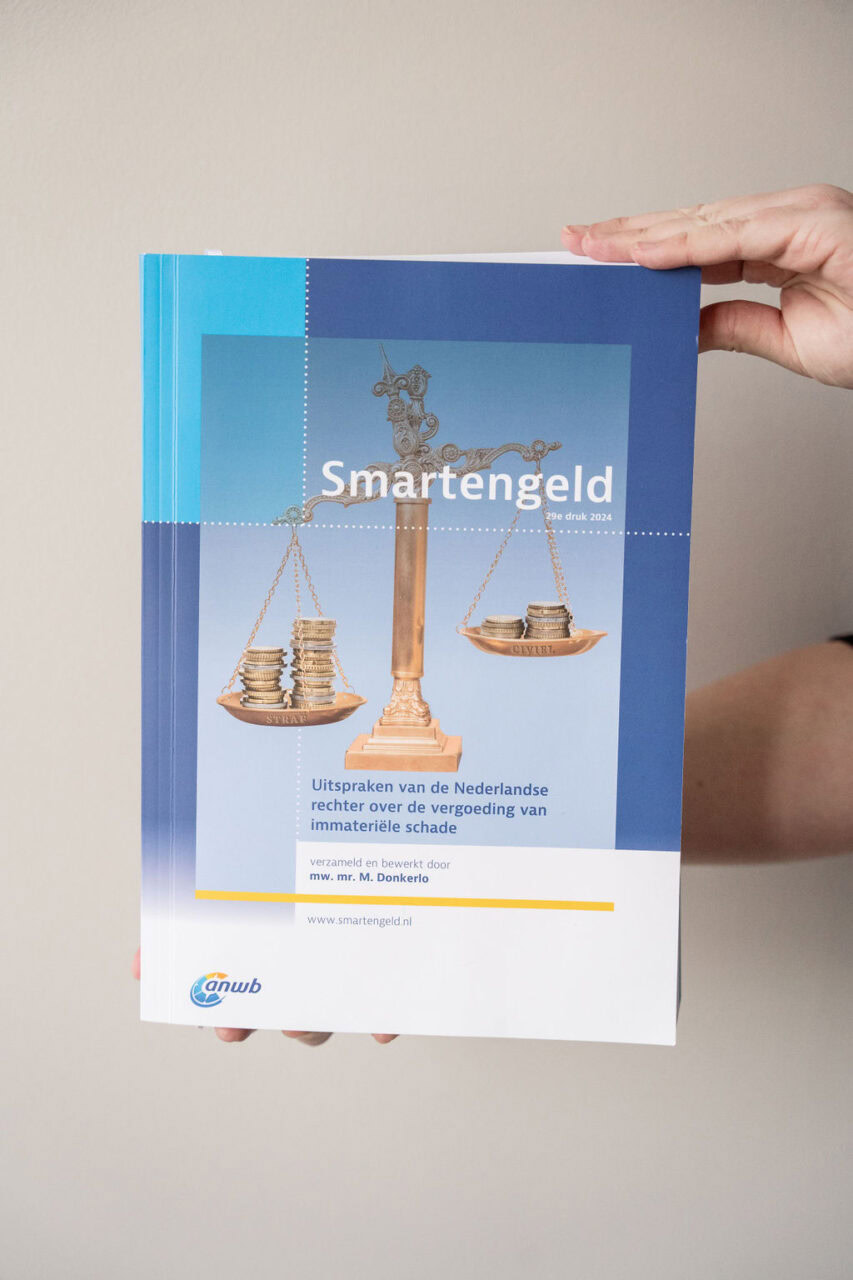
So calculating compensation for psychological damage is very complex. Always have an experienced lawyer do this for you. Our lawyers also look at the amounts in the Smartengeldgids. This guide contains current court decisions on compensation amounts in personal injury cases. Your personal injury lawyer can use this as substantiation in your personal injury case.

يُعد Smartengeldgids المرجع الذي يستخدمه فريقنا القانوني عند احتساب قيمة التعويض عن الأضرار المعنوية.

Insurer reimburses our legal assistance

Did you already know that the insurer of the other party must reimburse our out-of-court costs when the other party is liable? This is because, according to Dutch law, you are entitled to free legal assistance for personal injury. Therefore, always choose a lawyer who can work for you free of charge.

Was the psychological damage caused by the accident?

Psychological damage must be compensated if it was caused by the accident. In principle, the party causing the accident must ensure that all your damages are compensated in such a way that your life is restored to its former state. To do this, the following hypothesis is used: what would your life have been like if the accident had not occurred?

For this, the other party’s insurer also looks at pre-existence and predisposition. Pre-existence means looking at whether your symptoms existed before the accident. If that is the case, the insurer will not want to compensate your psychological damage or deduct a portion from your compensation. Predisposition means that you have a predisposition to contract certain symptoms, for example, if you have a genetic predisposition to develop a depressive disorder. If so, the insurer will use this against you. This is just not correct. Even if the psychological damage was caused by your predisposition, you are entitled to compensation.

It is nice if you have hired a lawyer to calculate and claim the psychological damage for you. This way, you do not have to argue with the insurer about your symptoms. This is because an insurer will always try to use pre-existence and predisposition as counterarguments. Even if it is not justified. This can be very painful and confrontational if you are the victim of an accident. Therefore, leave this to your lawyer.

Tangible costs fall under material damage

You may also face tangible costs due to psychological damage. For example, are you seeing a psychologist to help you find a place for your grief? If so, these costs should also be reimbursed. Therapy costs fall under your material damages because they are tangible costs. Our lawyers take this into account when calculating your total compensation.

Calculation of shock and compensation for loved ones

You can only claim shock and compensation for loved ones as a partner, parent, child or next of kin of the victim. It is therefore separate from compensation and damages, which are specifically intended for a personal injury victim. Yet, shock damages are calculated in the same way. For this, it looks at:

  • any costs you have had to incur, such as psychiatrist’s fees
  • or lost, including part of your salary for the period you were unable to work
  • How much emotional damage you suffered from the terrible scene you saw happen or its aftermath

With affectieschade, there are fixed amounts. The amount you receive depends on:

  • the relationship you have or had with the victim
  • whether the victim suffered serious and permanent injuries or died
  • Whether it was an accident or a crime

Incidentally, you may be entitled to shock and compensation for loved ones. If this is the case, an experienced lawyer will always point this out to you.

The benefits of personal legal assistance

Put a lot of worries aside by hiring an experienced lawyer. You have already been through enough because of the accident. Therefore, leave the discussions with the other party to an experienced lawyer. After all, it can be very frustrating if you have to defend your pain and grief. Especially if you are still full of emotion.

Always choose a lawyer who puts your interests first. Then you can be sure to get a lawyer who:

  • claims the maximum compensation for you
  • demands an advance payment once the other party’s insurer has acknowledged liability
  • listens to your wishes and needs
  • always keeps you informed of all developments in your personal injury case
  • is always there for you

Do you hire our personal injury agency? Then you will get a personal lawyer who will take care of everything for you. You will only have to tell your story once.

Would you like to know more about the personal injury process or engage us directly? Then contact us via the contact form. Leave your name and phone number. Tell us about the accident. Then one of our lawyers will call you back the same working day.

What happened?

Fill in the contact form below and receive free, no-obligation advice from our experts!

056rd Jblg 24112022 Aspect Ratio 1 1

Your type of accident:*
Your name:*
يوم شرطة مائلة شهر شرطة مائلة سنة

Frequently asked questions from personal injury victims

What is the difference between compensation and compensation for pain and suffering?

Compensation is the full amount you will receive after an accident. This compensation consists of all the expenses you incurred as a result of the accident, including missed income, medical expenses and domestic help. Compensation for pain and suffering is purely for the pain and emotional damage that you suffered as a result of the accident.

When will I be paid the compensation for pain and suffering?

The amount of the pain and suffering compensation cannot be finally determined until you have recovered as much as possible from your injuries. You will therefore only receive this compensation, including the rest of the damages, in your bank account when your case is settled. You will therefore receive the maximum compensation for pain and suffering.

Am I always entitled to compensation for pain and suffering?

As a personal injury victim, you are always entitled to compensation for pain and suffering when you are entitled to compensation. After all, as a personal injury victim, you will always have to deal with pain and sorrow, and usually a temporarily diminished zest for life. Imagine, for example, that you cannot run the marathon you have been training for all year. Or even never be able to run properly again. Compensation for pain and suffering is for this: for the pain and emotional damage you experience because of the accident.