 NL
NL ES
ES PL
PL TR
TR


 By:
By: 
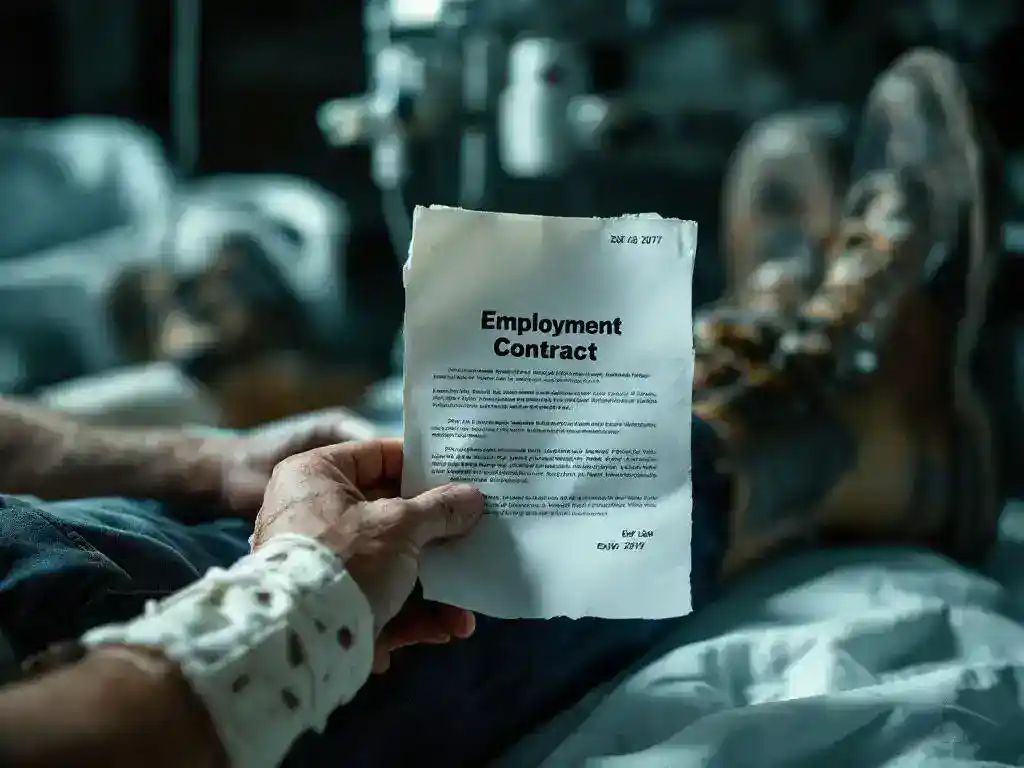
When your contract expires while you’re recovering from a workplace accident, Dutch employment law provides specific protections to prevent employers from exploiting your vulnerable position. You retain certain rights during periods of illness, and employers face restrictions on termination during your recovery. Understanding these protections ensures you can focus on healing while safeguarding your employment rights and compensation entitlements.
What happens to your employment when your contract expires during illness from a workplace accident?
Dutch employment law provides automatic contract extensions when fixed-term contracts expire during illness caused by workplace accidents. Your employment continues beyond the original end date until you recover or reach maximum medical improvement. This protection prevents employers from using contract expiry as a way to avoid their responsibilities during your recovery period.
The extension applies regardless of whether your contract was for a specific period or a particular project. Your employer cannot simply let the contract lapse and claim to have no further obligations. During this extended period, you retain all employment rights, including salary continuation, holiday entitlements, and other contractual benefits.
This protection covers various workplace accident scenarios, from physical injuries requiring surgery to occupational diseases that develop over time. The key requirement is that your illness directly results from workplace conditions or incidents that occurred during your employment.
Employers must continue paying your salary according to statutory requirements, typically at least 70% of your normal wages for the first two years of illness. They cannot reduce this payment simply because the original contract period has ended.
Can your employer legally terminate your contract while you’re recovering from a workplace injury?
Termination during workplace injury recovery is heavily restricted under Dutch labour law. Employers cannot dismiss employees during the first two years of illness caused by workplace accidents, except in very specific circumstances such as serious misconduct or company bankruptcy. This protection ensures you can recover without fear of losing your job.
The termination ban applies from the moment you report sick due to a workplace accident until you’re declared fit for work or reach maximum medical improvement. Even if your employer claims other reasons for dismissal, courts scrutinise such cases carefully when they coincide with workplace injury recovery.
Limited exceptions exist for gross misconduct unrelated to your injury, such as theft or fraud. However, employers must prove that the misconduct occurred and was not connected to your medical condition or treatment needs.
If your employer attempts unlawful termination during your recovery, you can challenge this through employment tribunals. Successful challenges often result in reinstatement or substantial compensation for wrongful dismissal.
| Protection Type | Duration | Employer Obligations |
|---|---|---|
| Dismissal Ban | Up to 2 years | Cannot terminate except for serious misconduct |
| Salary Continuation | Up to 2 years | Minimum 70% of normal wages |
| Contract Extension | Until recovery | Maintain all employment benefits |
What compensation are you entitled to when your contract expires during workplace injury recovery?
You’re entitled to continued salary payments, coverage of medical expenses, and additional damages when your contract expires during workplace injury recovery. Salary continuation of at least 70% typically continues for up to two years, while medical costs directly related to your workplace accident must be covered by your employer’s insurance.
Beyond basic salary continuation, you may claim compensation for pain and suffering, loss of earning capacity, and future medical needs. These damages recognise the broader impact of your workplace accident on your life and career prospects.
Medical expense coverage includes treatments, medications, rehabilitation, and adaptive equipment needed due to your workplace injury. This coverage continues even after your employment relationship ends, provided the expenses relate to your workplace accident.
Additional compensation categories include:
- Loss of future earnings if your injury affects your long-term earning capacity
- Costs of retraining for alternative employment if you cannot return to your previous role
- Home modifications needed due to permanent disabilities
- Transportation costs for medical appointments and treatments
- Pain and suffering compensation for the physical and emotional impact
The total compensation depends on your specific circumstances, the severity of your injury, and your long-term prognosis. A professional legal assessment helps ensure you claim all compensation to which you are entitled.
How do you protect your legal rights when facing contract expiry during workplace injury recovery?
Document everything thoroughly, maintain regular communication with your employer, and seek legal assistance immediately when facing contract expiry during workplace injury recovery. Proper documentation creates evidence for your case, while professional legal support ensures you understand and exercise all available rights and remedies.
Start by gathering all employment documents, medical records, and correspondence about your workplace accident. This documentation proves your employment status, the work-related nature of the accident, and your ongoing medical needs.
Maintain written communication with your employer about your condition and recovery progress. Email confirmations of conversations help establish a clear timeline and demonstrate your employer’s awareness of your situation.
Key protective steps include:
- Report your workplace accident immediately and obtain written acknowledgement
- Keep detailed medical records linking your condition to workplace causes
- Save all employment contracts, payslips, and benefits documentation
- Record all communications with employers, insurers, and medical professionals
- Seek an independent medical assessment to support your case
- Engage legal representation before accepting any settlement offers
Professional legal assistance becomes crucial when employers dispute your rights or insurance companies offer inadequate compensation. Calculating proper compensation requires expertise in Dutch employment and personal injury law.
Remember that time limits apply to various claims, so prompt action protects your interests. Legal professionals can guide you through complex procedures while you focus on recovery.
If you’re facing contract expiry during workplace injury recovery, don’t navigate this challenging situation alone. Understanding your rights is the first step, but professional legal support ensures those rights are fully protected. Contact experienced legal professionals who can assess your specific situation and guide you through the process of securing the protection and compensation you deserve.
Frequently Asked Questions
What should I do if my employer claims they don't need to extend my contract because it was only temporary?
Dutch law requires automatic contract extension regardless of whether your original contract was fixed-term, temporary, or project-based. Your employer cannot avoid their obligations by claiming the contract was only temporary – the extension is mandatory during workplace injury recovery until you reach maximum medical improvement.
How do I prove that my illness is directly related to my workplace accident for contract protection purposes?
You need medical documentation linking your condition to workplace causes, incident reports from when the accident occurred, and witness statements if available. An independent medical assessment can strengthen your case by establishing the causal relationship between your workplace conditions and your current health issues.
What happens if I'm still not fully recovered after the two-year protection period ends?
After two years, your employer gains more flexibility to terminate your employment, but they must still follow proper dismissal procedures and may need to demonstrate they’ve made reasonable accommodations. You may still be entitled to ongoing compensation for permanent disabilities or reduced earning capacity resulting from your workplace accident.
Can my employer reduce my responsibilities or demote me while my contract is automatically extended due to illness?
Your employer cannot unilaterally change your job conditions, salary, or responsibilities during the protected period without your agreement. Any changes to your employment terms must be mutually agreed upon and cannot be used to pressure you into accepting unfavorable conditions while you’re recovering from your workplace injury.
Would you like to share this article?

