 NL
NL ES
ES PL
PL TR
TR


 By:
By: 
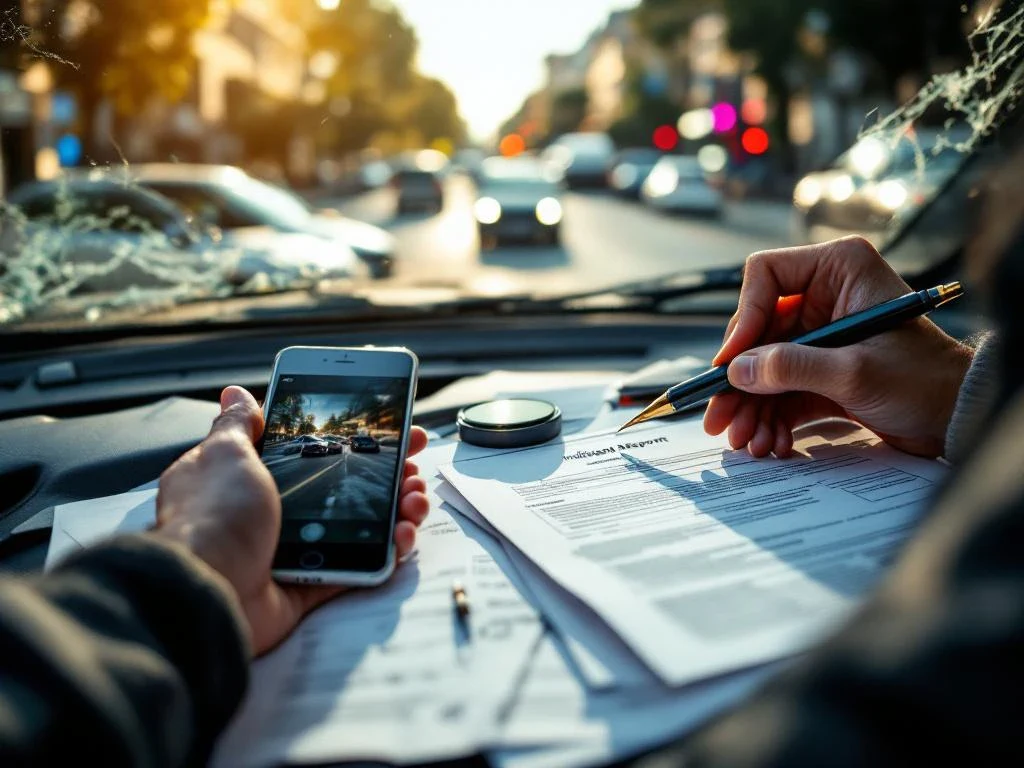
Proving that you were hit by a car requires collecting multiple types of evidence to establish what happened and support your claim. Essential documentation includes police reports, medical records, witness statements, and physical evidence from the scene. The strength of your case depends on gathering this evidence quickly after the accident, as details can become unclear and physical evidence may disappear. Having comprehensive proof protects you against disputes and helps ensure you receive proper compensation for your car accident injuries.
What evidence do you need to prove you were hit by a car?
You need four main types of evidence to prove a car accident occurred: a police report, medical documentation, witness statements, and physical evidence from the scene. The police report provides an official record of the incident, while medical records link your injuries directly to the accident. Witness statements offer independent verification of events, and physical evidence such as vehicle damage or road conditions supports your version of what happened.
The police report serves as the foundation of your evidence because it contains crucial details recorded immediately after the accident. This includes the officer’s assessment of the scene, statements from all parties involved, and any traffic violations observed. Even if the police do not determine fault at the scene, their report documents important facts that insurance companies and legal professionals use when investigating your claim.
Physical evidence encompasses several elements that strengthen your case:
- Photographs of vehicle damage, injuries, and road conditions
- Skid marks or debris patterns on the roadway
- Traffic camera footage or nearby security camera recordings
- Damaged clothing or personal belongings
- Weather and lighting conditions at the time of impact
Medical records create an essential timeline connecting your injuries to the accident. Seeking immediate medical attention, even for seemingly minor injuries, establishes this crucial link and helps prevent the other party from arguing that your injuries occurred elsewhere or at a different time.
How do witness statements help prove a car accident happened?
Witness statements provide independent, third-party accounts of your accident that can verify your version of events and significantly strengthen your case. Credible witnesses who saw the collision occur offer unbiased perspectives that insurance companies and courts value highly. Their testimonies become particularly important when the at-fault driver disputes what happened or claims the accident occurred differently from how you describe it.
Effective witness statements should include specific details about what the person observed before, during, and after the impact. The most valuable witnesses are those who clearly saw the collision and can describe factors such as vehicle speeds, traffic signals, weather conditions, and each driver’s actions. Passengers in either vehicle can also serve as witnesses, though their statements may carry less weight due to potential bias.
When collecting witness information at the scene, gather the following details:
| Information Needed | Why It’s Important |
|---|---|
| Full name and contact details | Allows follow-up contact for formal statements |
| What they observed | Provides their account of events |
| Where they were positioned | Establishes their vantage point and credibility |
| Time they arrived at the scene | Confirms whether they saw the actual impact |
Document witness statements as soon as possible after the accident, as memories fade quickly and people may become harder to reach. If witnesses are willing, ask them to write down what they saw or record their account on your phone. Having multiple witnesses who corroborate your story creates compelling evidence that is difficult for the other party to dispute.
What should you do immediately after being hit by a car?
Immediately after being hit by a car, call emergency services, ensure your safety, and begin documenting the scene while evidence is fresh. Your actions in the first few minutes after the accident can significantly impact your ability to prove what happened and recover compensation. Even if you feel uninjured, adrenaline can mask pain and injuries may not become apparent until hours or days later.
Follow these essential steps in order of priority:
- Call 999 to report the accident and request medical assistance if needed
- Move to safety if possible, but do not leave the scene
- Check for injuries to yourself and others involved
- Exchange information with the driver, including insurance details
- Take photographs of all vehicles, injuries, and road conditions
- Identify and speak with any witnesses present
- Note the time, weather, and traffic conditions
- Avoid admitting fault or discussing blame at the scene
When speaking with the driver, remain calm and factual. Collect their full name, contact information, driving licence number, insurance company, and policy number. Also note their vehicle’s make, model, colour, and registration number. If the driver seems intoxicated, agitated, or attempts to leave the scene, inform the police immediately.
Document everything you can see and remember about the accident. Take photos from multiple angles showing vehicle positions, damage, skid marks, traffic signs, and any relevant road conditions. If you are too injured to do this yourself, ask a witness or bystander to help. This evidence becomes crucial if the other driver later changes their story or denies responsibility.
How can medical records prove your car accident injuries?
Medical records establish a direct connection between your injuries and the car accident by documenting when symptoms first appeared and how they relate to the collision. Immediate medical attention creates a clear timeline that helps prevent insurance companies from arguing that your injuries existed before the accident or resulted from another cause. Comprehensive medical documentation also demonstrates the severity and extent of your injuries for compensation purposes.
Seeking prompt medical care serves multiple purposes beyond your health and recovery. Emergency room visits, doctor consultations, and diagnostic tests create official records that detail your condition immediately following the accident. These records include the medical professional’s assessment of how your injuries likely occurred, which supports your claim that the car accident caused your harm.
Your medical documentation should include detailed records of all treatments and ongoing symptoms. Keep copies of emergency room reports, doctors’ notes, diagnostic test results, prescription records, and any referrals to specialists. Physical therapy records, psychological counselling notes, and follow-up appointments all contribute to demonstrating the full impact of your injuries.
Even seemingly minor injuries warrant medical attention after a car accident. Soft tissue injuries, concussions, and emotional trauma may not present obvious symptoms immediately but can develop into serious conditions requiring extensive treatment. Having medical professionals evaluate and document your condition protects your right to compensation if symptoms worsen or new problems emerge later.
What happens when the driver denies hitting you?
When the driver denies hitting you, your case relies heavily on the evidence you have collected and independent verification of the accident. Insurance companies will conduct their own investigation using police reports, witness statements, physical evidence, and any available camera footage. Strong documentation becomes essential for proving your version of events and securing the compensation you deserve despite the driver’s denial.
Insurance investigators examine all available evidence to determine what actually happened, regardless of what either party claims. They analyse vehicle damage patterns, road evidence, witness accounts, and medical records to reconstruct the accident. Traffic cameras, nearby business security cameras, or dashboard cameras from other vehicles can provide crucial footage that definitively shows what occurred.
Professional accident reconstruction may become necessary in complex cases where fault is disputed. These experts analyse physical evidence, vehicle damage, and road conditions to determine how the collision occurred. Their findings can override conflicting statements from the parties involved and provide clear evidence of responsibility.
Independent evidence sources often prove more valuable than personal testimony when drivers dispute fault. Mobile phone records can show whether the other driver was distracted, while GPS data might reveal their speed or driving pattern before the accident. Nearby businesses or traffic authorities may have recorded footage that captures the collision or the moments leading up to it.
If you are dealing with a disputed car accident claim, professional legal assistance can help gather evidence and present your case effectively. Experienced professionals know how to investigate thoroughly and build compelling cases even when the other party denies responsibility. You can use our damages calculator to estimate potential compensation, and our team can provide guidance on strengthening your case through proper evidence collection and legal strategy.
Frequently Asked Questions
What if I didn't take photos at the scene – can I still prove my case?
Yes, you can still build a strong case without scene photos. Police reports, medical records, witness statements, and any available security camera footage can provide crucial evidence. Contact nearby businesses or traffic authorities immediately to request camera footage before it’s deleted, and focus on documenting your injuries and gathering witness information.
How long do I have to collect evidence after a car accident?
You should collect evidence immediately, but some can be gathered later. Security camera footage is typically deleted within 30-90 days, so request it quickly. Medical records and police reports can be obtained weeks later, but witness memories fade rapidly, making early contact essential for strong statements.
What should I do if witnesses leave before I can get their information?
Ask other people at the scene if they know the witnesses or got their contact details. Check if nearby businesses have customer information if witnesses were patrons. Police officers may have spoken with witnesses, so their contact details might be in the police report you can obtain later.
Can dashcam footage from my own car be used as evidence?
Yes, your dashcam footage is excellent evidence that shows exactly what happened from your perspective. It can capture the other driver’s actions, traffic conditions, and the moment of impact. Save the footage immediately and make backup copies, as this objective evidence is often more valuable than witness statements.
What if the other driver's insurance company says I'm partially at fault?
Insurance companies often try to reduce payouts by claiming shared fault. Gather all your evidence and consider getting legal help to challenge their assessment. Independent accident reconstruction experts can analyze the evidence objectively, and strong documentation often overturns initial fault determinations made by insurance adjusters.
Would you like to share this article?

