NL
NL ES
ES PL
PL


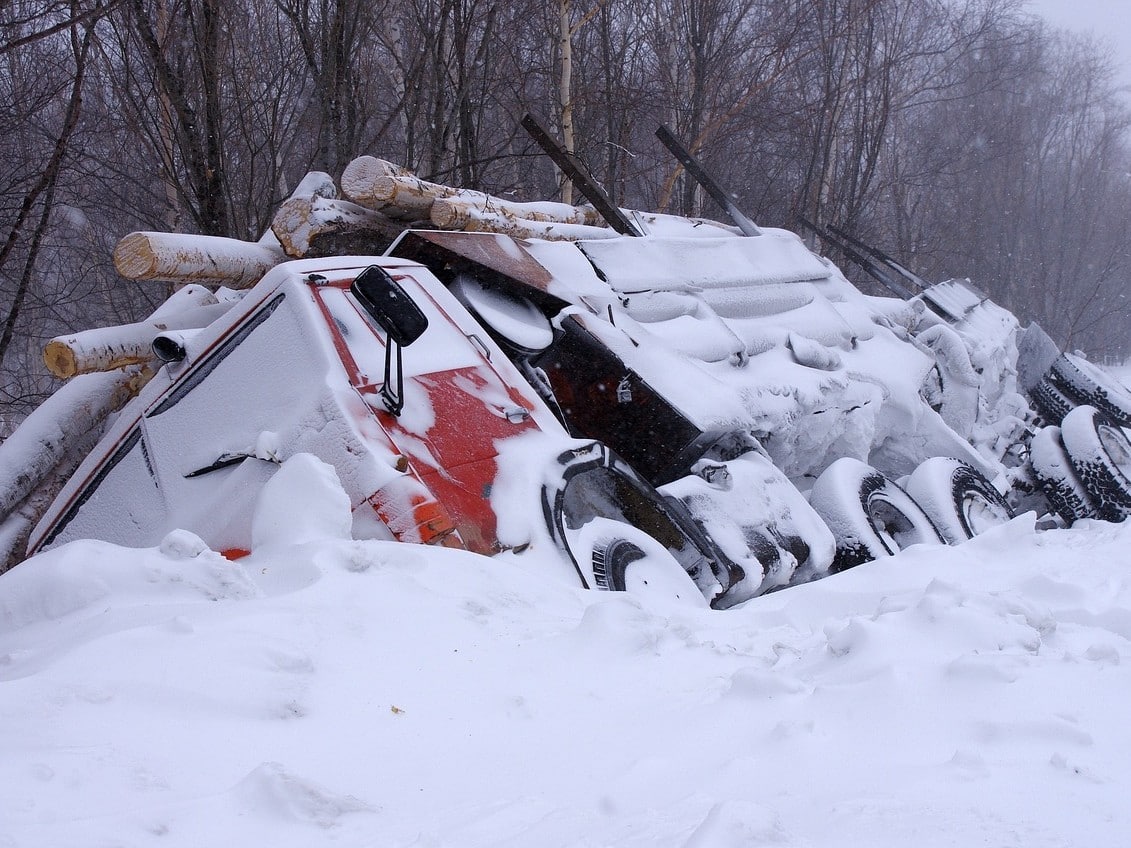
Last week and last weekend it was quite slippery on Dutch roads. So slippery that code orange was issued twice. And winter has only just begun… So it could still get slippery in our cold little country in the coming months. This slipperiness increases the risk of personal injury due to an ugly fall or slip. In what situations can you hold the municipality, another road user or your employer liable? And what about unilateral accidents? We discuss all these situations with you in this article.
More road accidents during snowfall
When it has been snowing or freezing and the roads are extremely slippery, many accidents happen. According to the Insurers’ Association, even a moderate snowfall can cause between 10% and 20% more traffic accidents. A heavy snowfall, more than 5 centimetres of snow, can even lead to 50% more accidents. So it is extra dangerous on the road when it is slippery. You are also warned about this in time by KNMI and ANWB.
This year, 7 code oranges were issued and 1 code red. A lot less than in 2021 when a record number of weather alarms were issued: 9 code oranges and 3 codes red, including 1 in February. So we may still face heavy black ice this winter. During the last weather alarm, a lot of people still took to the roads. This resulted in some 500 accidents, despite the fact that as much as 13 kilos (!) of salt had been spread. At JBL&G, we also received an avalanche of new contact forms.
Because what about liability if you are hit by ice? Or get into a one-sided accident? Is the accident then your own fault? Because you know the risks of going out on the road when it is slippery? And warnings have also been issued by KNMI in this regard? Or can you still hold someone else liable for your personal injury?
Can the municipality be held liable, for example, because it was not gritted properly? Another road user, because he or she slid into you? Or your employer, because the accident occurred during working hours? We will tell you when you are entitled to compensation in these situations.
When can the municipality be held liable?
When it has snowed and then frozen, it is slippery everywhere. The pavement, the cycle path and the motorways. If you are lucky, they have been gritted. Still, even that does not stop all slipperiness. Now you are wondering whether you can hold the municipality liable if you fell on a section of road that was not gritted.
According to Section 6:174 of the Civil Code, the possessor is responsible for the surface, which includes paved roads. In this sense, the municipality is responsible for the pavement and street. Only, when it gets slippery, it will soon be a case of force majeure for the municipality. After all, they can grit preventively, but if snow continues to fall, it is a fight against a losing battle. In addition, the municipality cannot grit everywhere at once, so some road sections are still slippery when you go to work, for example. But even when the roads are gritted, you can still slip and you cannot always hold the municipality liable.
However, there are some situations where you can hold the municipality liable. These are situations where the municipality:
- On the part of the road where you fell, it forgot to grit. You can then see that gritting has been done around that spot. Always take a photo of this as evidence.
- Deviate from the original gritting route without logical explanation.
You can usually find the gritting route on the website of the respective municipality.
When can a road user be held liable?
If you have been hit by another road user due to slipperiness, you can almost always hold the other party liable. Only in a few rare cases can the road user invoke force majeure. For example, when the slipperiness occurs suddenly. Of course, nine times out of 10, this is not the case. After all, there are usually warnings about slippery roads well in advance.
So did you get into a rear-end collision, for example? Then the rear-ending motorist can almost always be held liable for your personal injury. The law states that one must maintain sufficient distance to stop a vehicle without danger. If it is slippery, the other party should bear in mind that he or she should keep even more distance. In addition, all road users should also adjust their speed to the prevailing weather conditions.
When can your employer be held liable for an accident due to slipperiness?
Your employer has a very strict duty of care towards you as an employee. This means that your employer must put in place everything in its power to ensure that you do not suffer injury during working hours. For example, your employer must ensure that you do not break your neck in the car park by having sufficient gritting.
But even outside the work site, your employer has a very strict duty of care. For instance, your employer must be properly insured against accidents on the road if you have to go from A to B for your work. If you are hit while at work or get into a one-sided accident, you can hold your employer liable. After all, your employer knowingly sent you on the road, despite the slippery road surface. Incidentally, this does not apply if you are driving to work or back home.
With a lot of delivery from home nowadays, this creates dangerous situations when it is slippery. The more delivery vans, electric delivery bikes and other delivery drivers on the road, the greater the risk of accidents. Therefore, be extra careful if you take to the road when it is slippery. Even if you still have a whole delivery list to complete. Do you still get injured by another road user or slide into a tree? If so, hold your employer liable for your personal injury.
In addition, your employer is also responsible for proper safety clothing. For example, the employer of a fallen rubbish collector was held liable, because the rubbish company had not provided slippery shoes for employees. The court found that the employer had thereby breached its duty of care.
What should you do in a unilateral accident after working hours?
Suppose you are driving home after working hours and slide into a pole. Can you then still claim compensation? You can do so for both yourself and your fellow passengers if you have passenger accident insurance. Even if you do not have winter tyres, as they are not yet compulsory in the Netherlands.
According to Richard Weurding – general director of het Verbond van Verzekeraars (the Insurers’ Association) – you are insured even if you hit the road during an issued weather alarm. Even at code orange and code red. But if it is not really necessary, it is obviously better not to hit the road then. After all, it is better to prevent accidents than to cure.
How do you hold the other party liable for an accident due to slipperiness?
In all cases, we recommend that you contact an experienced personal injury firm that can claim the maximum compensation for you from the relevant other party. You are also entitled to free legal assistance for personal injury in an accident caused by slipperiness. Our out-of-court costs must also be reimbursed by the other party in this situation. In addition, we would like to advise you to continue to pay particular attention to the weather reports and drive carefully. Let us work together to make the roads as safe as possible.

Want to share this article?