NL
NL ES
ES PL
PL TR
TR


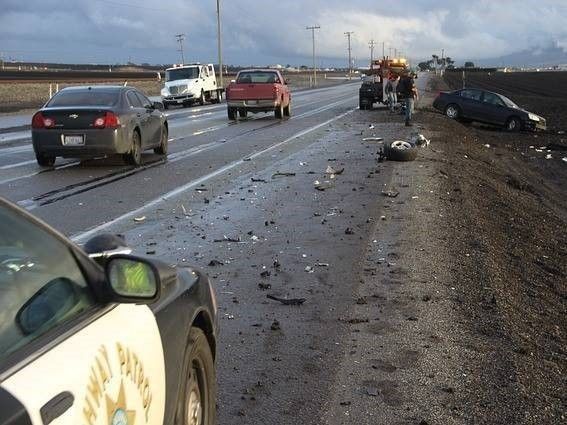
In a chain collision, it can be very difficult to prove that you yourself were not at fault for the accident. In most cases, the person who collides with the car in front of him is liable for the damage to the car in front of him in the event of a chain collision. However, it is also possible that the driver who rear-ends the vehicle in front of him was, in turn, pushed through by a car that hit it from behind. In this article, you can read more about who is liable.

Chain collision: who is liable?
To answer that question, we first take a brief look at the law:
- Article 5WVW states that everyone must behave in such a way that he does not cause any danger on the road.
- And Article 6 of the Road Traffic Act states that a road user may not behave in such a way that a road accident occurs through his fault.
- Article 19 of the RVV also states in the law: The driver must be able to stop his car within the distance he can overlook the road.
So in most cases, the driver behind is liable for the damage to the car ‘driving’ in front of him.
Holding the rear-ending driver liable in the event of a chain collision
In the event of a chain collision, you always start by holding the person who was driving behind you liable for your damage. If you were first hit by the car driving behind you and as a result hit your own vehicle in front, the driver in front of you can hold you liable for his damage. In that case, you will have to prove that this collision that you ’caused’ was the result of your driver who rear-ended you.
Keep enough distance from the vehicle in front
You must prove that you were pushed forward through the fault of another person and as a result collided with the vehicle in front. In other words: you must be able to demonstrate that you have kept a sufficient distance from the vehicle in front. Only then do you stand a chance of full personal injury compensation in your personal injury case. Matters that can help you prove this:
- Statements from witnesses who were in the car with you. They can indicate that the impact to the back came first, and then the impact to the front.
- Statement of passengers of the car that rear-ended you. They can indicate that you were standing still before you were hit.
Kept enough distance
If you kept a sufficient distance, you have nothing to worry about.
The most frequently asked question about liability in the event of a chain collision
Is the last driver in line always liable in a chain collision? NO. Read more below.
Fault of the car in front with respect to liability in the event of a chain collision
If the driver at the back can demonstrate that the traffic accident and thus the chain collision was caused by the act of the very first car, then there is a chance that this driver can be held liable for the damage suffered by the driver behind. For example:
- He or she overtook on the right;
- He or she changed lanes without caution and without giving direction.
Braking without traffic emergency
If someone brakes suddenly without a traffic emergency, they can be held liable for the chain collision. After all, this is prohibited under Article 5 of the WVW. And the motorist who brakes suddenly without necessity can therefore be held liable for the occurrence of damage. The rear-ending party can be held partly liable if he has not kept enough distance.
Insurers come to an arrangement
Many insurers have made an arrangement among themselves, whereby in the event of a chain collision the insurer of the rear-ending vehicle pays for the damage to the vehicle driving directly in front of it. This is to simplify the complicated liability issue in chain collisions and to avoid lengthy and expensive legal proceedings. Thus, the agreement also benefits the motorist.
Frequently asked questions from personal injury victims
Q: Who should pay in the event of a chain collision?
A: The insurer of the one who causes the chain collision must pay for your damage. The culprit is usually the last car in line. In order to receive compensation for your damage, it is important that you complete the claim form after the collision. This contains all the details about the accident and the counterparty.
Q: What to do in the event of a chain collision?
A: In the event of a chain collision, it is important that you complete the claim form. Also note the details of witnesses. Then take photos as evidence: of the traffic situation, your injuries, and other damage to your personal property. Then have your injuries treated in the hospital or by your doctor. Then seek legal assistance as soon as possible.
Q: Who is at fault in the event of a chain collision?
A: The counterparty in a chain collision is the motorist who caused the chain collision. This is usually the last car in line. You fill in this information on the claim form. You can also take a picture of this as evidence.

Want to share this article?