 NL
NL ES
ES PL
PL TR
TR


 By:
By: 
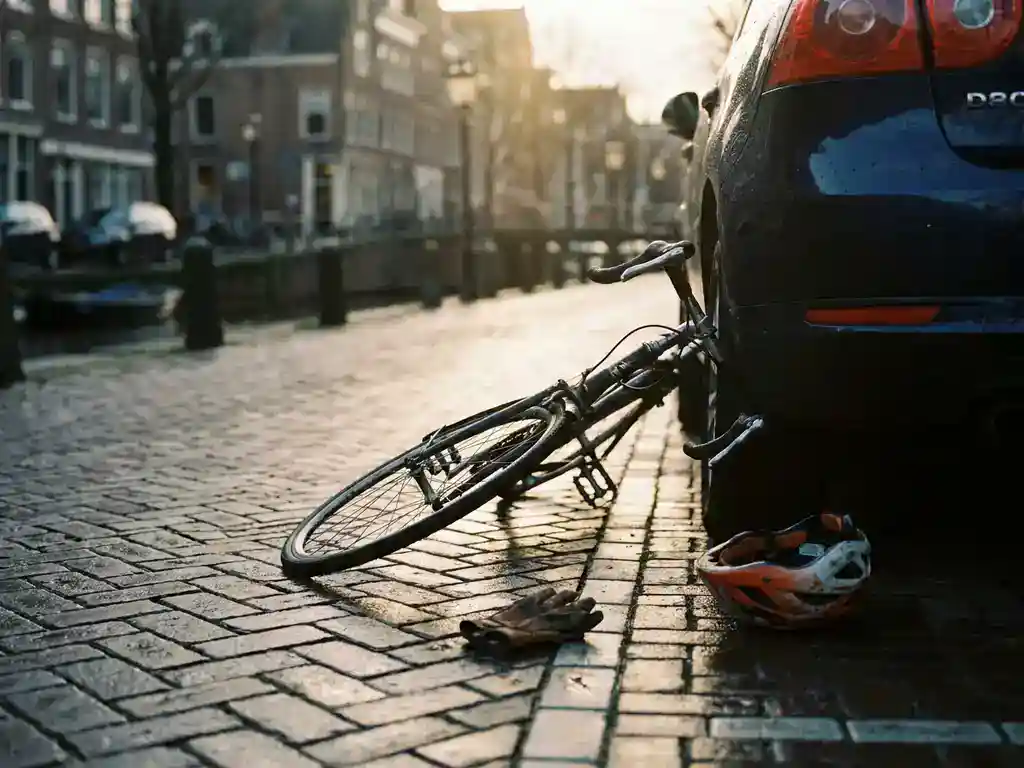
As a cyclist involved in a collision with a car in the Netherlands, you are entitled to compensation for all material and immaterial damages you have suffered as a result of the accident. This includes medical costs, lost income, pain and suffering, and any lasting impact on your daily life. Whether your injuries are minor or severe, Dutch law strongly protects cyclists in these situations, and the sections below explain exactly what you can claim and how the process works. If you have questions about your specific situation, feel free to get in touch with us for a free, no-obligation consultation.
What types of damages can a cyclist claim after a car collision?
After a collision with a car, a cyclist can claim compensation for medical expenses, lost income, rehabilitation costs, damage to personal property such as the bicycle, and pain and suffering. Dutch personal injury law aims to put the victim back in the financial position they would have been in had the accident never occurred, covering both economic and non-economic losses.
The main categories of damages a cyclist can claim include:
- Medical costs: Hospital treatment, physiotherapy, specialist consultations, medication, and any future medical care related to the injuries
- Lost income: Wages or self-employment income lost during recovery, including any reduction in future earning capacity
- Household assistance: Costs of help with domestic tasks you can no longer perform yourself during recovery
- Property damage: Repair or replacement of your bicycle, clothing, helmet, or other personal items damaged in the collision
- Travel costs: Expenses for traveling to medical appointments or rehabilitation sessions
- Pain and suffering (smartengeld): A financial acknowledgment of the physical pain and emotional distress caused by the accident
It is worth noting that compensation is not limited to immediate costs. If your injuries have longer-term consequences, such as a reduced ability to work or ongoing care needs, these future losses are also factored into your claim. Even for relatively minor injuries, it is advisable to document all costs from the very beginning, as seemingly small expenses can add up significantly over time.
Who is liable when a car hits a cyclist in the Netherlands?
In the Netherlands, the driver of a motor vehicle is almost always legally liable when their vehicle strikes a cyclist. This is based on Article 185 of the Dutch Road Traffic Act (Wegenverkeerswet), which places a strict duty of care on motorists towards vulnerable road users such as cyclists and pedestrians. The car driver’s insurer is responsible for compensating the cyclist’s damages.
Dutch law deliberately places the burden of proof on the motorist rather than the cyclist. A driver can only escape liability if they can prove that the accident was caused entirely by circumstances beyond their control or by the cyclist’s deliberate intent, which is an exceptionally high bar to meet in practice.
This protective legal framework reflects the recognition that cyclists are physically vulnerable compared to motor vehicle occupants. Even in situations where the cyclist made a traffic error, the motorist may still bear full or partial liability. The car driver’s mandatory third-party liability insurance (WA-verzekering) is the primary source of compensation for injured cyclists, meaning victims do not need to pursue the individual driver personally for payment.
How is pain and suffering compensation calculated for cyclists?
Pain and suffering compensation, known in Dutch as smartengeld, is calculated based on the nature and severity of the injuries, the duration of recovery, the impact on daily life, and any permanent consequences. There is no fixed formula, but Dutch courts use a reference guide called the ANWB Smartengeldgids, which collects comparable case judgments to help establish appropriate amounts.
Several factors influence the final amount awarded for pain and suffering:
- The type and seriousness of the physical injuries sustained
- The length and intensity of the recovery period
- Whether the injuries have resulted in permanent disability or disfigurement
- The psychological impact, including anxiety, depression, or post-traumatic stress
- The degree to which normal daily activities, hobbies, and social life have been disrupted
Because smartengeld is assessed case by case, two cyclists with superficially similar injuries may receive different amounts depending on how those injuries have affected their individual lives. This is why thorough documentation, including medical reports, personal statements, and records of how the injury has affected your work and personal life, plays a crucial role in securing fair compensation. You can get a preliminary estimate of your potential claim using a damages calculator to understand the range of what you may be entitled to.
What happens to compensation if the cyclist was partly at fault?
If a cyclist was partly responsible for the collision, Dutch law applies a principle called eigen schuld (own fault), which can reduce the compensation proportionally. However, even when a cyclist has contributed to the accident, they are still entitled to receive at least 50% of their damages from the car driver’s insurer under the protective rules of Article 185 of the Road Traffic Act.
In practice, this means that if a court determines the cyclist was 30% at fault and the driver 70% at fault, the cyclist would receive 70% of the total calculated damages. The minimum 50% rule exists specifically to protect vulnerable road users and ensures that cyclists are never left without meaningful compensation simply because they made a traffic error.
For cyclists under the age of 14, Dutch law provides even stronger protection: the car driver’s insurer must pay 100% of the damages regardless of any fault on the part of the child. This reflects the legal system’s recognition that young children cannot be held to the same standard of road behavior as adults.
Determining the exact apportionment of fault is often a point of negotiation between legal representatives and insurers. Having professional support during this process helps ensure that any fault attributed to the cyclist is assessed fairly and not overstated by the opposing insurer.
How long does a cyclist’s personal injury claim take to settle?
The duration of a cyclist’s personal injury claim in the Netherlands typically ranges from several months to a few years, depending on the complexity of the injuries, the clarity of liability, and the cooperation of the insurer involved. Straightforward cases with clear liability and limited injuries can sometimes settle within six to twelve months, while cases involving serious or long-term injuries often take longer.
The main factors that influence the timeline of a claim are:
- Medical stabilisation: A claim is usually not finalised until the injured cyclist has reached a stable medical condition, so that future costs and losses can be accurately assessed
- Liability disputes: If the car driver or their insurer contests responsibility, the process of establishing liability adds time
- Complexity of damages: Claims involving significant lost income, long-term care needs, or psychological injury require more extensive documentation and expert assessment
- Insurer responsiveness: The speed at which the opposing insurer responds to correspondence and settlement proposals affects the overall timeline
It is possible to receive interim payments during the claims process to cover ongoing costs such as medical bills or lost wages, so you are not left financially exposed while waiting for a final settlement. Contacting a legal specialist as soon as possible after the accident helps set the process in motion without unnecessary delay.
Do cyclists need a lawyer to claim compensation after an accident?
Cyclists are not legally required to hire a lawyer to claim compensation after a collision, but professional legal assistance is strongly recommended regardless of whether the injuries are minor or severe. Insurers are experienced negotiators who aim to minimise payouts, and without expert support, cyclists often accept settlements that significantly undervalue their actual damages.
A legal specialist adds value at every stage of the process: assessing the full scope of your damages, gathering the right evidence, negotiating with the insurer, and ensuring that both current and future losses are properly accounted for. This is equally important for relatively minor injuries as it is for serious ones, since even a soft tissue injury or short-term inability to work can result in substantial financial loss if not properly documented and claimed.
Many people hesitate to seek legal help because they assume it will be expensive. However, legal bureaus like ours operate on a completely cost-free basis for the victim. We recover our fees directly from the liable party’s insurer, meaning you pay nothing at all, regardless of the outcome. Our costs have no influence on the amount of compensation you receive. If you have been injured in a collision as a cyclist, we encourage you to contact us today for a free consultation. We will call you back the same working day to discuss your situation and explain your options.
Frequently Asked Questions
Hoe snel moet ik een schadeclaim indienen na een fietsongeval met een auto?
V: Hoe snel moet ik een schadeclaim indienen na een fietsongeval met een auto?nA: Het is verstandig om zo snel mogelijk na het ongeval een claim in te dienen, omdat bewijsmateriaal en getuigenverklaringen snel verloren kunnen gaan. In Nederland geldt een verjaringstermijn van drie jaar, maar vroeg beginnen vergroot de kans op een volledig en eerlijk schadebedrag aanzienlijk.
Wat moet ik direct na een aanrijding als fietser doen om mijn claim te beschermen?
V: Wat moet ik direct na een aanrijding als fietser doen om mijn claim te beschermen?nA: Zorg direct na het ongeval voor een officieel politierapport, maak foto’s van de schade en letsel, noteer de gegevens van de bestuurder en eventuele getuigen, en bewaar alle medische documenten en bonnen. Deze bewijzen vormen de basis van een sterke schadeclaim en voorkomen discussies achteraf over toedracht of schadeomvang.
Waarom is het belangrijk om ook kleine kosten bij te houden na een fietsongeval?
V: Waarom is het belangrijk om ook kleine kosten bij te houden na een fietsongeval?nA: Kleine kosten zoals reiskosten naar de fysiotherapeut of aanpassingen thuis lijken op zichzelf onbeduidend, maar kunnen over de gehele herstelperiode oplopen tot een aanzienlijk bedrag. Door alles nauwkeurig bij te houden en bonnen te bewaren, zorg je ervoor dat geen enkele vergoeding aan je neus voorbijgaat.
Wat als de automobilist niet verzekerd was ten tijde van het ongeval?
V: Wat als de automobilist niet verzekerd was ten tijde van het ongeval?nA: Als de betrokken automobilist niet verzekerd blijkt te zijn, kun je als fietser een beroep doen op het Waarborgfonds Motorverkeer, een speciaal fonds dat slachtoffers van onverzekerde of onbekende voertuigen compenseert. Hierdoor blijf je als benadeelde partij nooit zonder verhaalsmogelijkheid, ongeacht de situatie van de aansprakelijke bestuurder.
Would you like to share this article?

